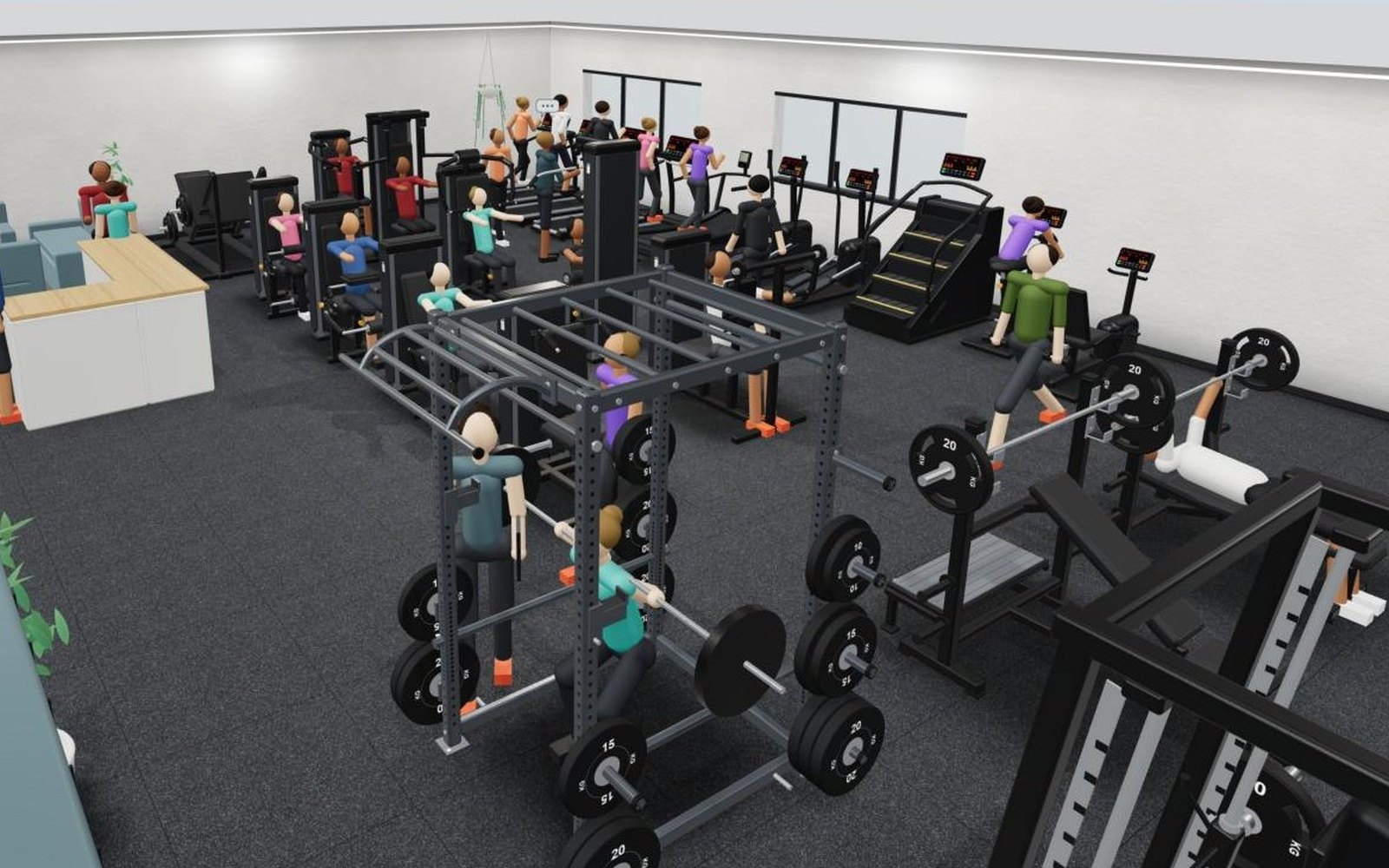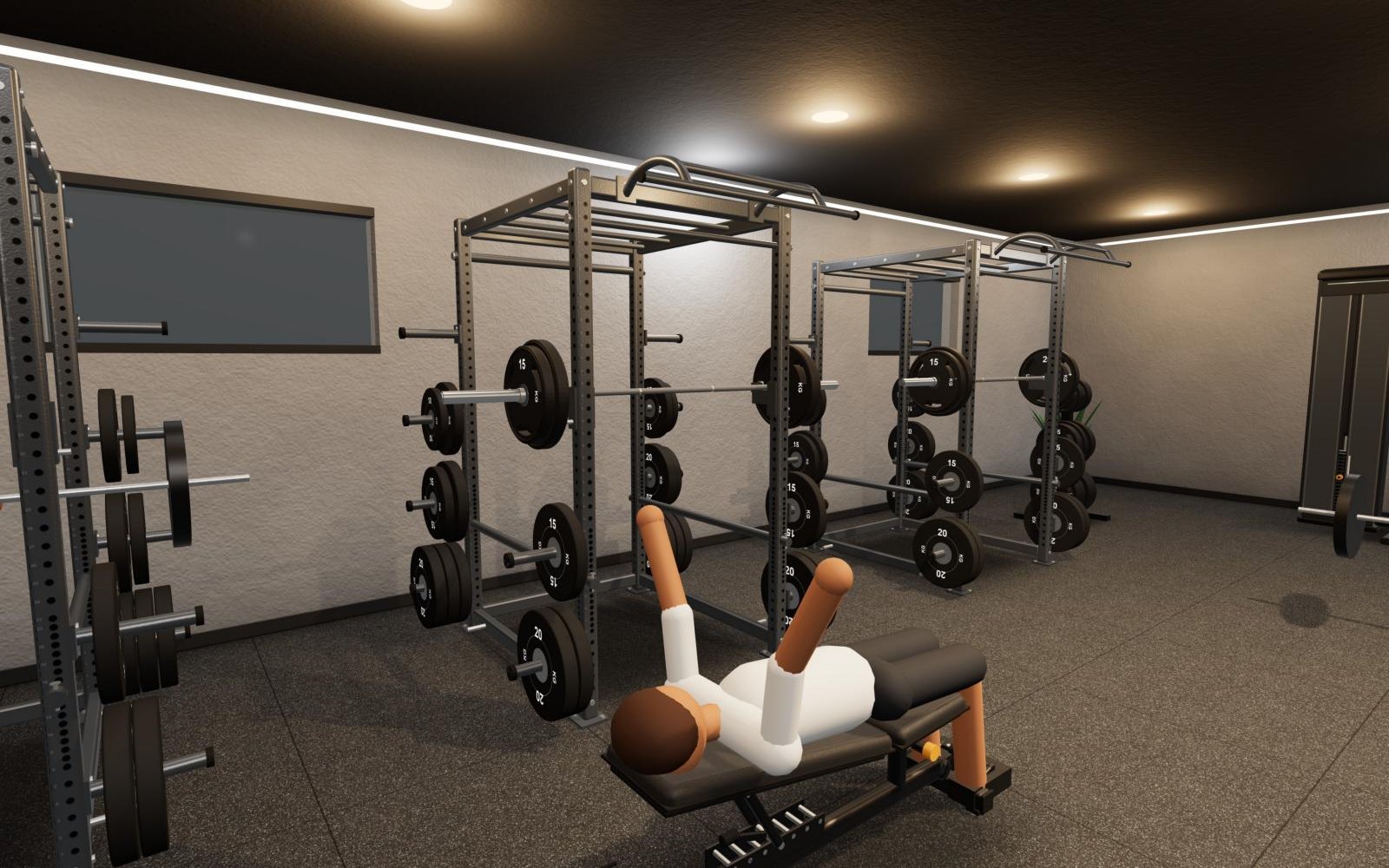
Racks and rigs are the backbone of any strength or functional space. Choosing them well affects safety, training experience and how the space can grow.
The bar decides the working width
- A typical rack is about 1.20 m wide on the outside.
- A women's Olympic bar is about 2.01 m long, a men's bar about 2.20 m.
- You need about 20 cm on each side to load plates comfortably and safely.
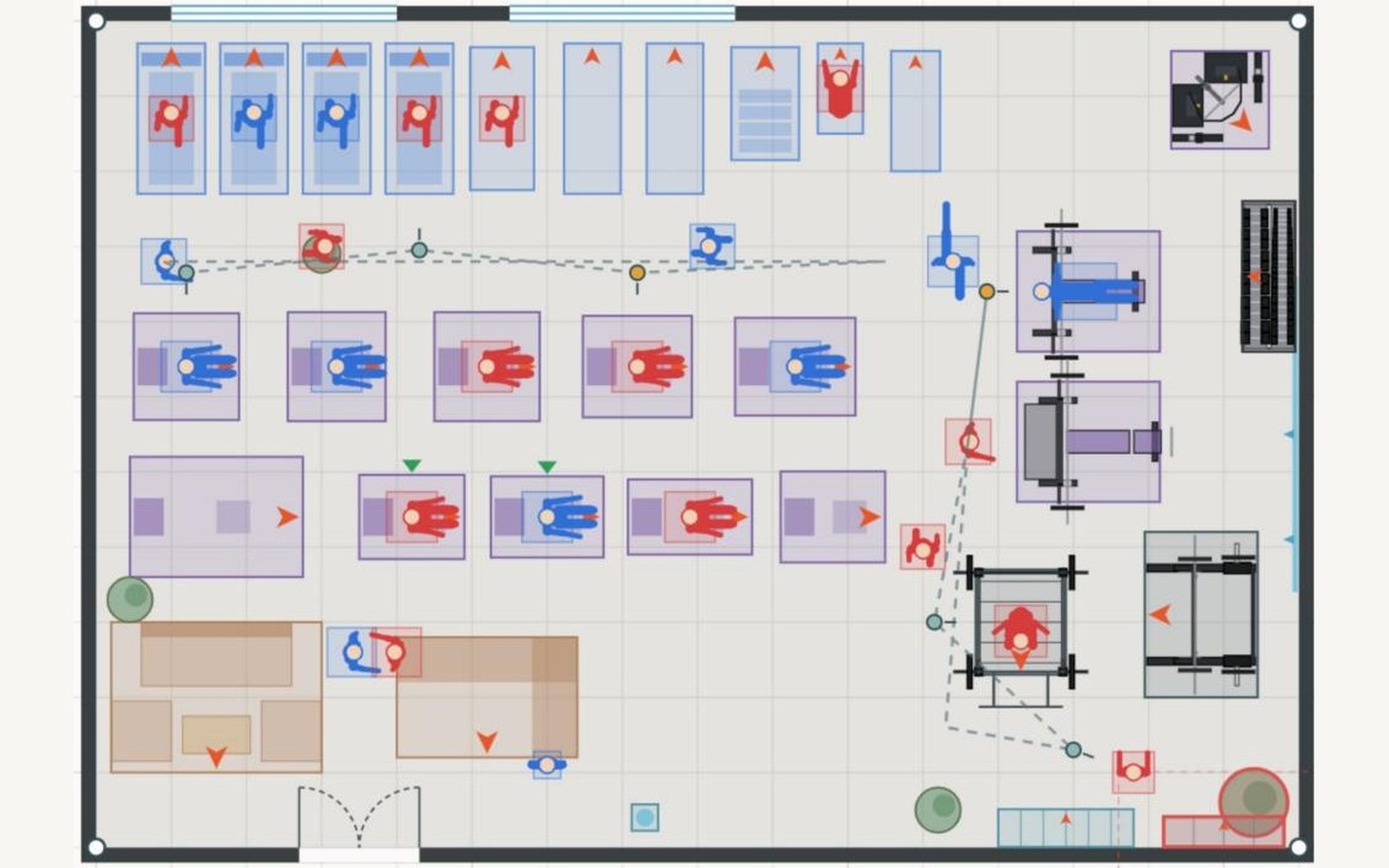
So each lifting station needs at least 2.60 m of width and about 1.50 m of depth, including the bench and safety area. Two stations side by side need 5.20 m, three need 7.80 m.
A fixed rig takes less space when nobody is using it, but in use the working area is the same as a free-standing rack.
Do not forget height
Many people plan width and forget height. If the rack or ceiling is too low, pull ups are limited and wall ball targets are useless. Check ceiling height before choosing.
Strength and stability
- Thicker, wider steel profiles (for example 80 × 80 mm) wobble less.
- Large quality bolts and thick connection plates keep the structure tight.
- Pull up bars should have reinforcement gussets, because the weld area on a thin bar is small.
Types
Free-standing rack: movable, flexible, comes with 2, 4 or 6 uprights. Less stable for hanging rings, suspension trainers or monkey bars.
Fixed rig: anchored to wall, floor or ceiling. Very stable, expandable, supports many attachments and 360° work. Moving it later is expensive, and anchoring usually requires a structural engineer's approval.
Folding rig: folds up or against the wall. Great for home gyms and small studios, not for heavy professional use.
Popular attachments
- Dip bars and leg raise stations
- Wall ball targets
- Landmine pivots
- Ring and suspension trainer hangers
- Monkey bars
Safety is not optional
Always use safety arms. A lifter who fails a rep without them risks serious injury, and an injury affects the member, your insurance and your reputation. Cheap modular stands with separate uprights are not stable enough for commercial use.