A workplace gym competes with meetings and deadlines. If it is not easy, quick and pleasant, people will not use it.
Start from budget and peak hours
Two numbers shape everything: the budget and the peak. Employees tend to arrive together, before work, at lunch and right after work, and when the gym is free and a few steps from the desk, participation is usually higher than in a commercial gym. Plan the showers, the cardio machines and the main stations for that peak, not for the daily average, or people will wait, give up and stop coming.
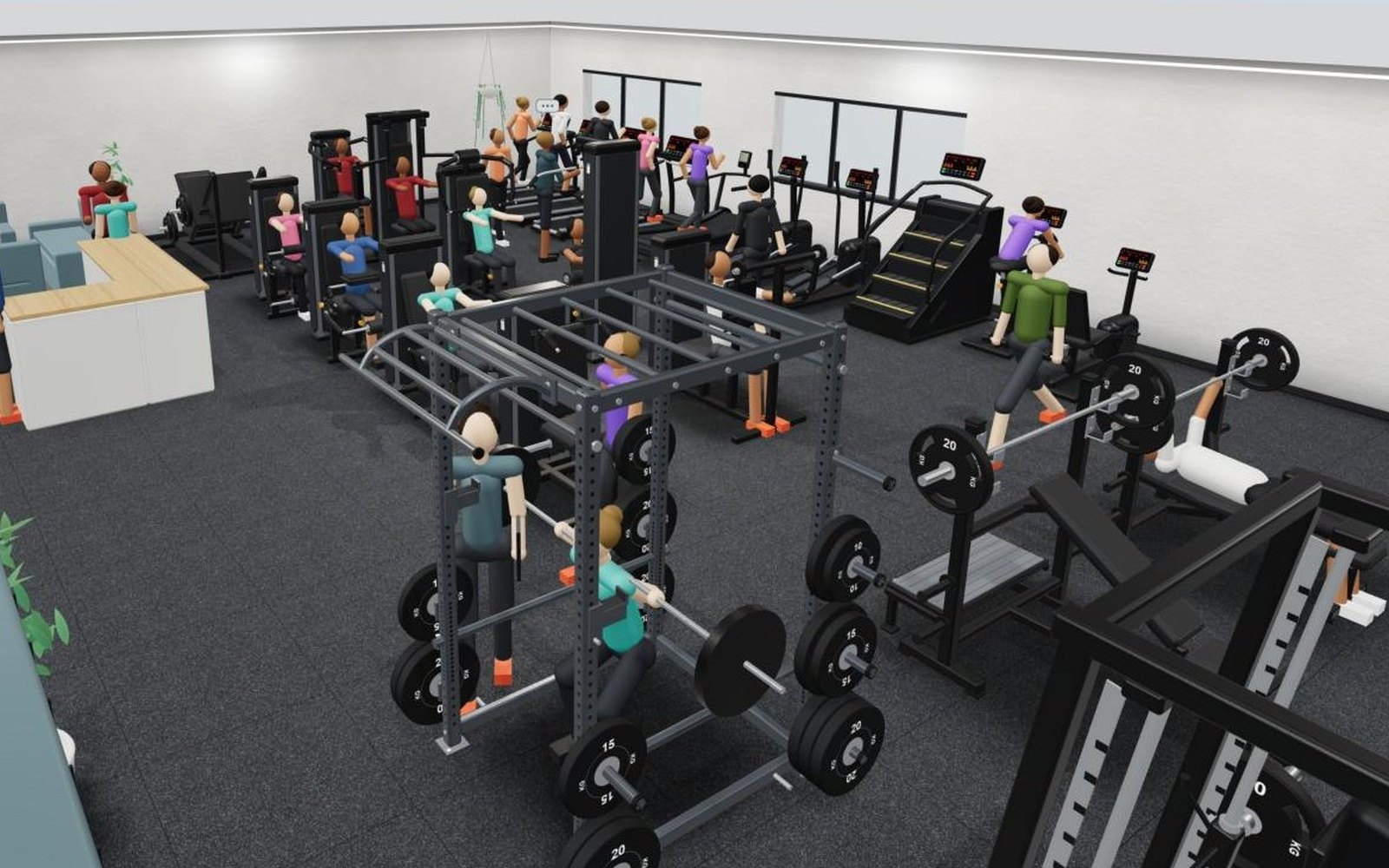
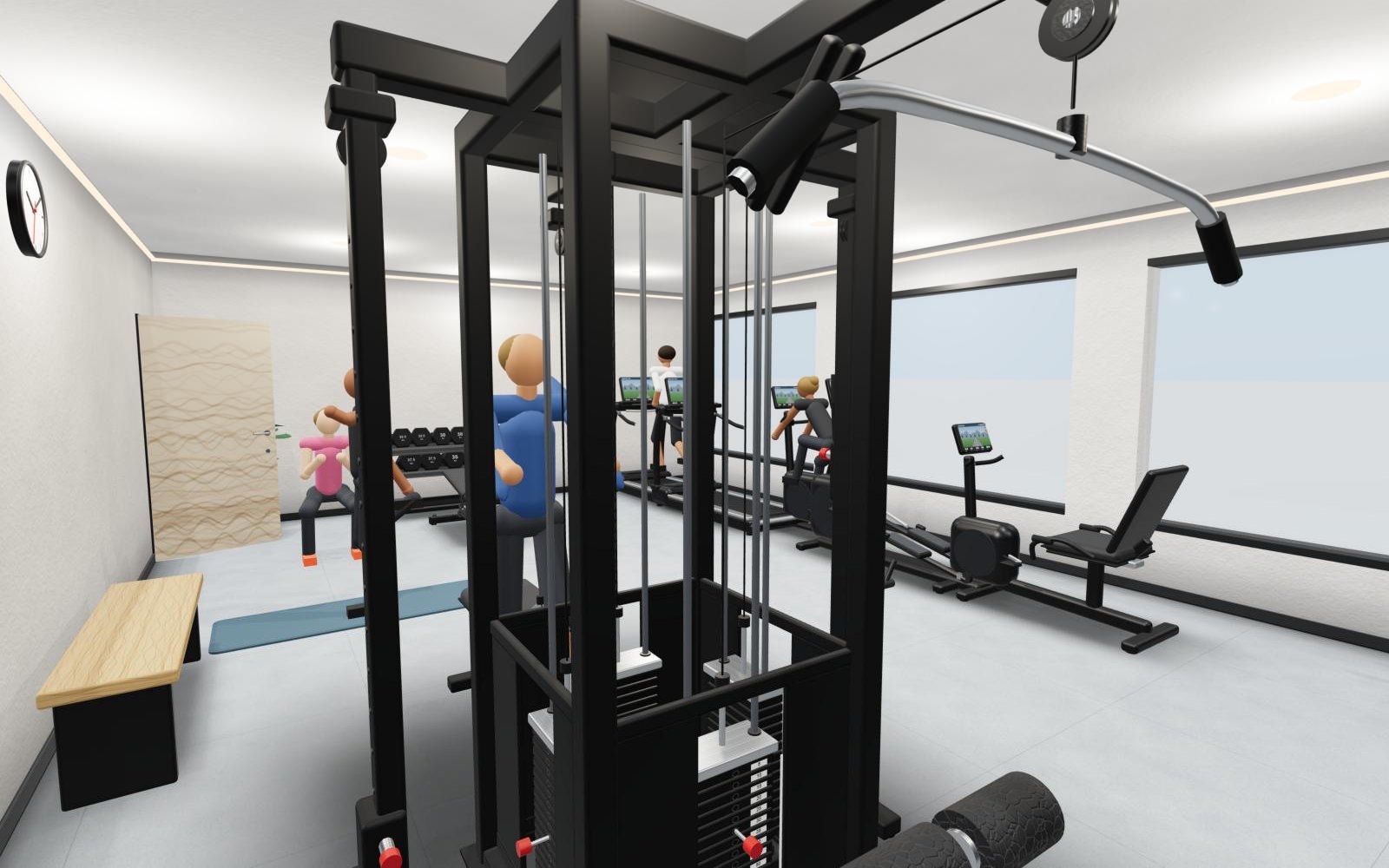
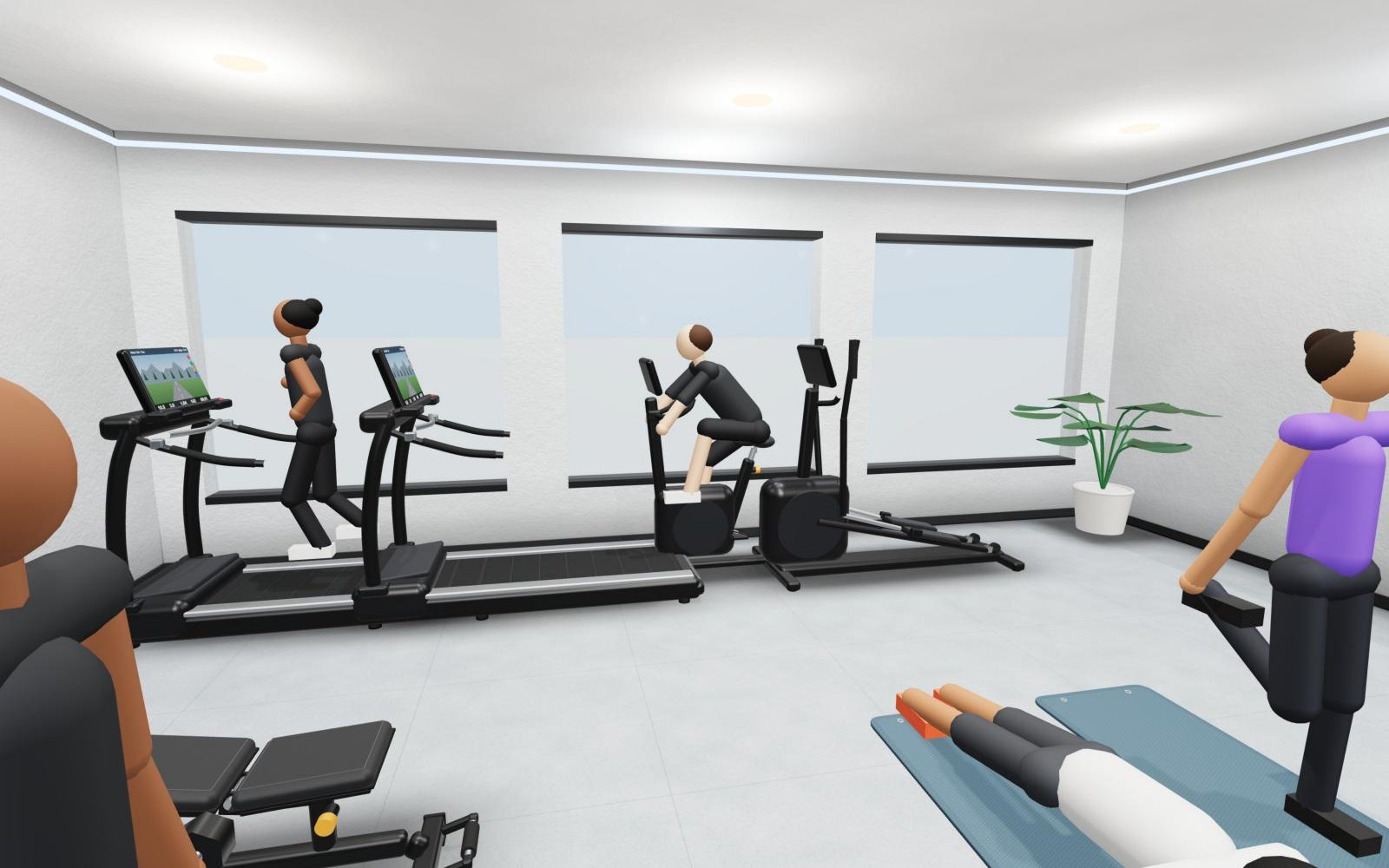
A small company does not need much. For a team of a few dozen people, 30 to 40 m² with a few cardio machines, a cable station, dumbbells, a bench and an open mat area is often enough, plus one or two showers.
Design for 30 minute workouts
Most employees train before work, at lunch or after work, in short sessions. Prioritise equipment that gives a full workout quickly: a few cardio machines, a cable station, adjustable dumbbells, a bench and a small open floor area.
Mixed users
From beginners to regular lifters. Machines and clear instructions help beginners; a rack or a dumbbell area keeps experienced users happy.
Changing rooms matter
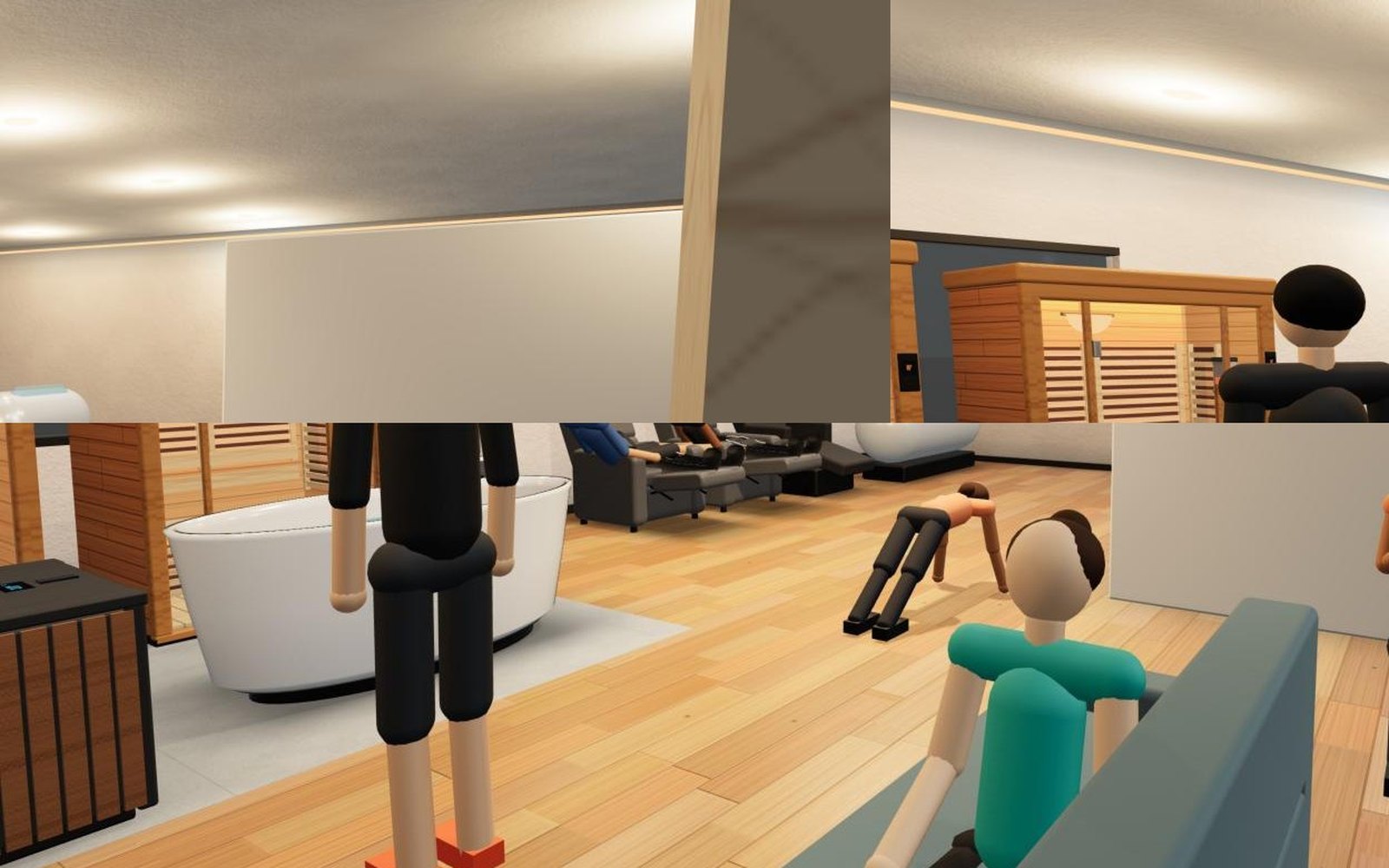
Showers and lockers decide whether people train during the workday. Plan them early, they need plumbing and drainage.
Noise and neighbours
Offices are quiet places. Use proper rubber flooring, avoid heavy drops above work areas, and consider acoustic treatment.
Access and safety
- Badge access and clear usage rules.
- Emergency button or phone, and a defibrillator nearby.
- Cameras where allowed.
Make it inviting
Daylight if possible, good ventilation, music and a few motivating graphics. A gym that feels like a forgotten storage room stays empty.