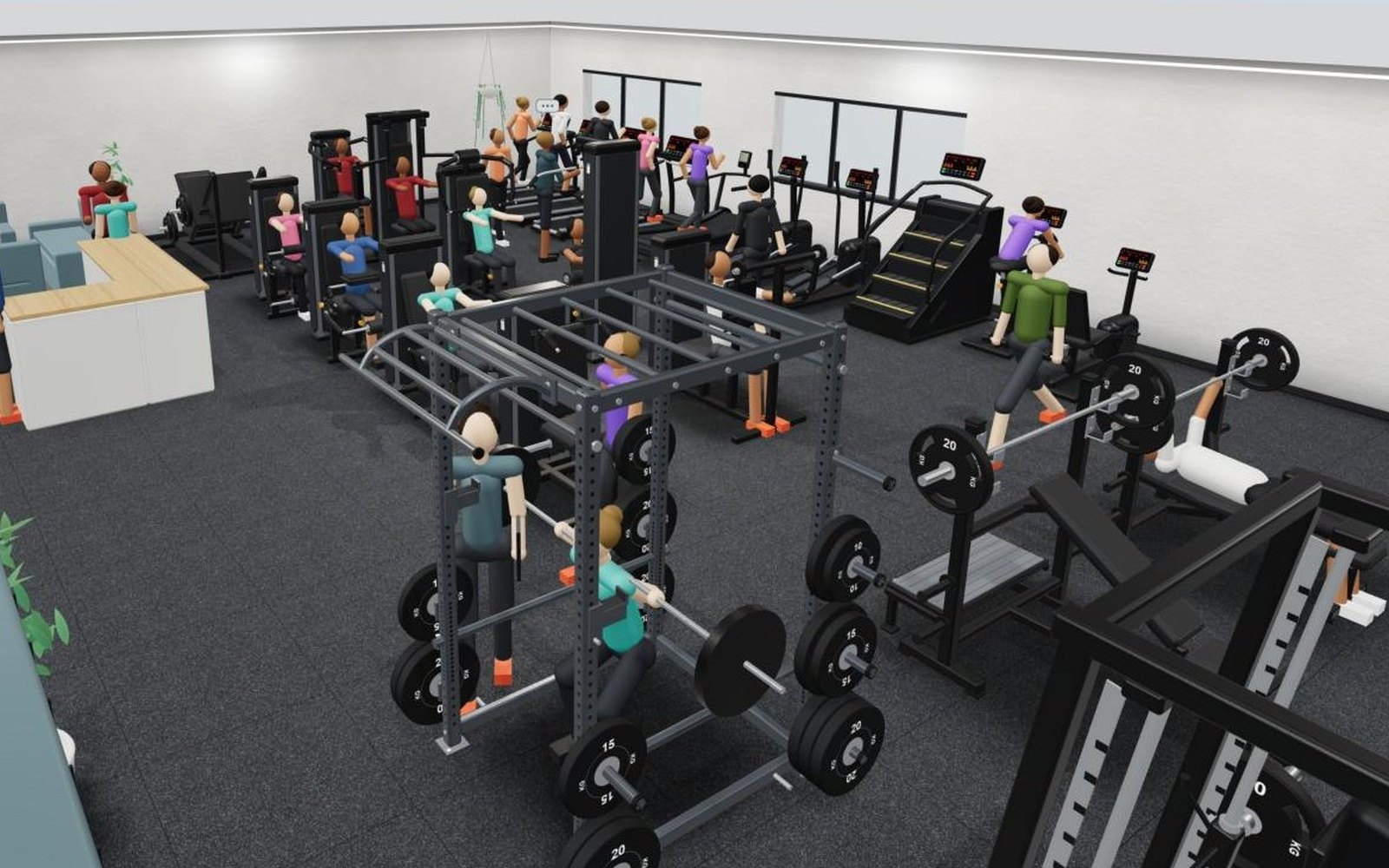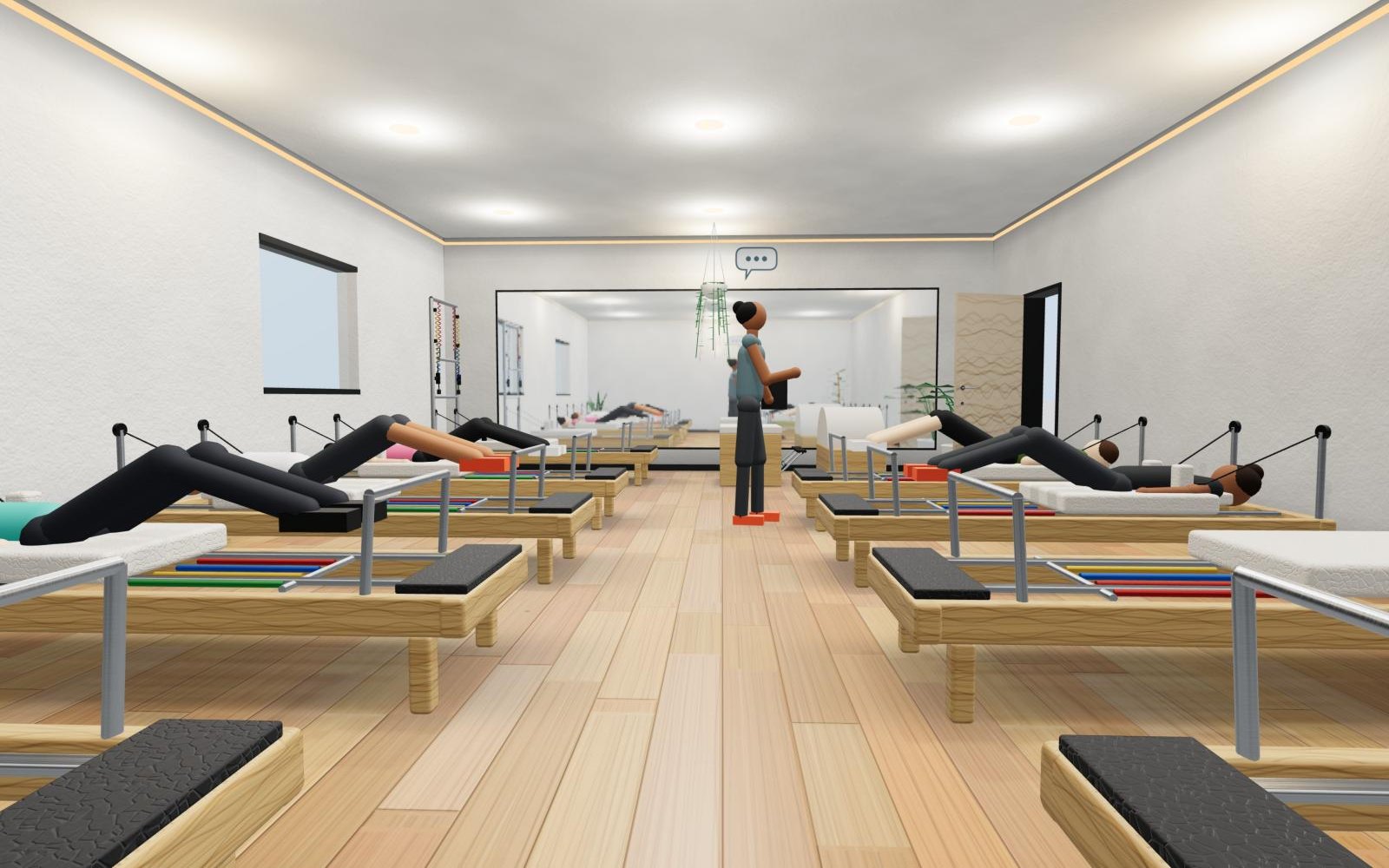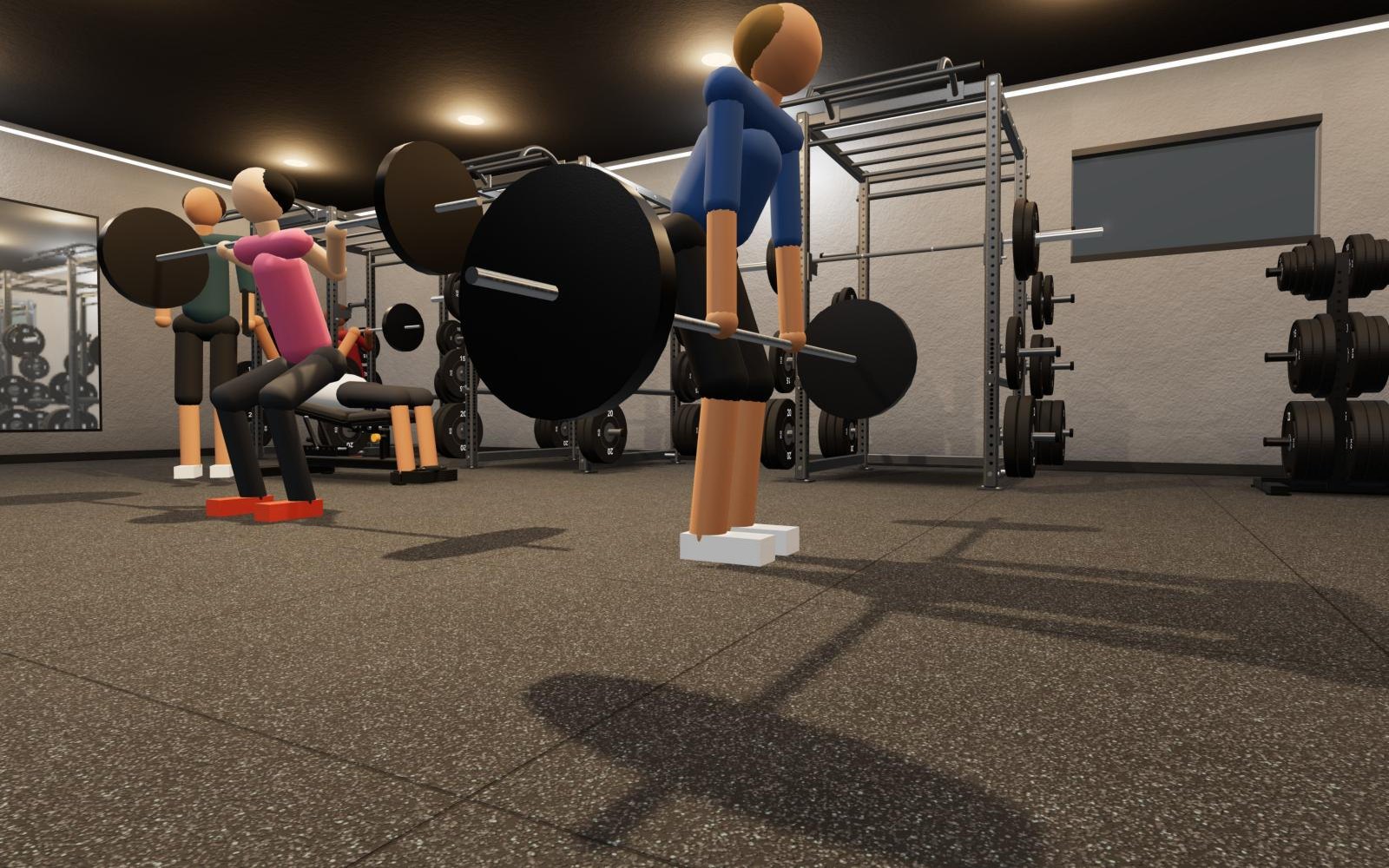
Rubber flooring is usually the first material people think of when building a gym or studio. Before you ask for a quote, a little preparation will get you a more accurate price and save expensive mistakes.
Measure accurately
Quotes are priced per square metre (or square foot), so you need the exact area of every zone that gets rubber. Drawing the space on a 2D plan makes this easy, including the area of each zone by floor type.
Add waste
- Simple rectangular rooms: about 10%.
- Rooms with many corners, angled or curved walls: 20% or more.
- Custom colours: order extra and keep it in storage for future repairs.
Installation is a separate cost
- Rolls always need full gluing, which raises installation cost.
- Tiles are usually laid by pressure fit, though large areas or heavy loads may need partial gluing.
- Complex rooms take more cutting and more time.
Ask suppliers to split the quote into material and installation so you can compare offers properly.
Thresholds and edges
Rubber raises the floor level. At doors and transitions you need thresholds or edge profiles to prevent trip hazards and give a clean finish. Rubber or metal thresholds both work, rubber gives a more continuous look.
Thickness by zone
| Zone | Typical thickness |
|---|---|
| Heavy free weights, lifting platforms | 30 to 40 mm tiles |
| Cardio and light functional | 15 to 20 mm tiles or rolls |
| Reception and walkways | Often regular flooring is enough |
You can combine thicknesses in one room. Define clear borders between zones and use transition profiles where heights change.
Rolls vs tiles
Rolls look seamless and are easy to clean. They suit cardio areas, yoga and light functional studios. But they absorb less impact, must be fully glued, create more waste, can react to heat in unconditioned rooms, and a damaged section often means replacing a whole roll.
Tiles are the most common choice in gyms: better shock absorption, long life, and you can replace a single damaged tile. Granulated tiles are cheaper but harder to clean. Tiles with a smooth top layer look cleaner and are easier to maintain, at a higher price.
The smell nobody mentions
Some rubber products have a strong smell that does not always disappear in a week or two. In a closed space used all day, it can become a real problem. Do not buy rubber flooring over the phone: smell the product, and if possible visit a space where it has been installed for a while.