How much space do you need for a fitness studio? The honest answer is: it depends on how many clients you want in one class and what they do. This guide gives you the planning numbers by studio type, in square meters and square feet, and shows how to turn them into a total studio size.
Fitness studio square footage per client
These ranges are for the training floor, including the space around each client and equipment. They are common rules of thumb for planning, not building rules.
| Studio type | m² per client | sq ft per client |
|---|---|---|
| Indoor cycling (per bike) | 2 to 2.5 | 22 to 27 |
| Yoga and mat pilates (per mat) | 3 to 4 | 32 to 43 |
| Boxing and martial arts | about 4 | about 43 |
| Functional training and HIIT | 4 to 5 | 43 to 54 |
| Dance | 4 to 5 | 43 to 54 |
| Reformer pilates (per reformer) | 6 to 7 | 65 to 75 |
Use the upper end for premium classes, dynamic formats and beginners, and the lower end only when the room is a clean rectangle with no columns.
From training floor to total studio size
The training floor is only part of the lease. A small studio also needs:
- Reception and waiting: a desk, a bench and space for the next class to gather.
- Changing rooms and toilets: at least one accessible toilet, and showers if clients come before work.
- Storage: mats, props, cleaning supplies and spare parts.
- Circulation: corridors and the path from the door to the training floor.
As a rough guide, these support spaces often take a third of a small studio, sometimes more. So if your class needs 60 m² of training floor, look at spaces of about 90 m² or more in total.
Worked examples
| Studio | Training floor | Total studio, roughly |
|---|---|---|
| Reformer studio, 10 reformers | 60 to 70 m² (646 to 753 sq ft) | 90 to 110 m² (969 to 1184 sq ft) |
| Spin studio, 20 bikes | 40 to 50 m² (431 to 538 sq ft) | 70 to 90 m² (753 to 969 sq ft) |
| Yoga studio, 18 mats | 55 to 70 m² (592 to 753 sq ft) | 85 to 105 m² (915 to 1130 sq ft) |
| HIIT studio, 16 people | 65 to 80 m² (700 to 861 sq ft) | 100 to 120 m² (1076 to 1292 sq ft) |
Why area is not enough
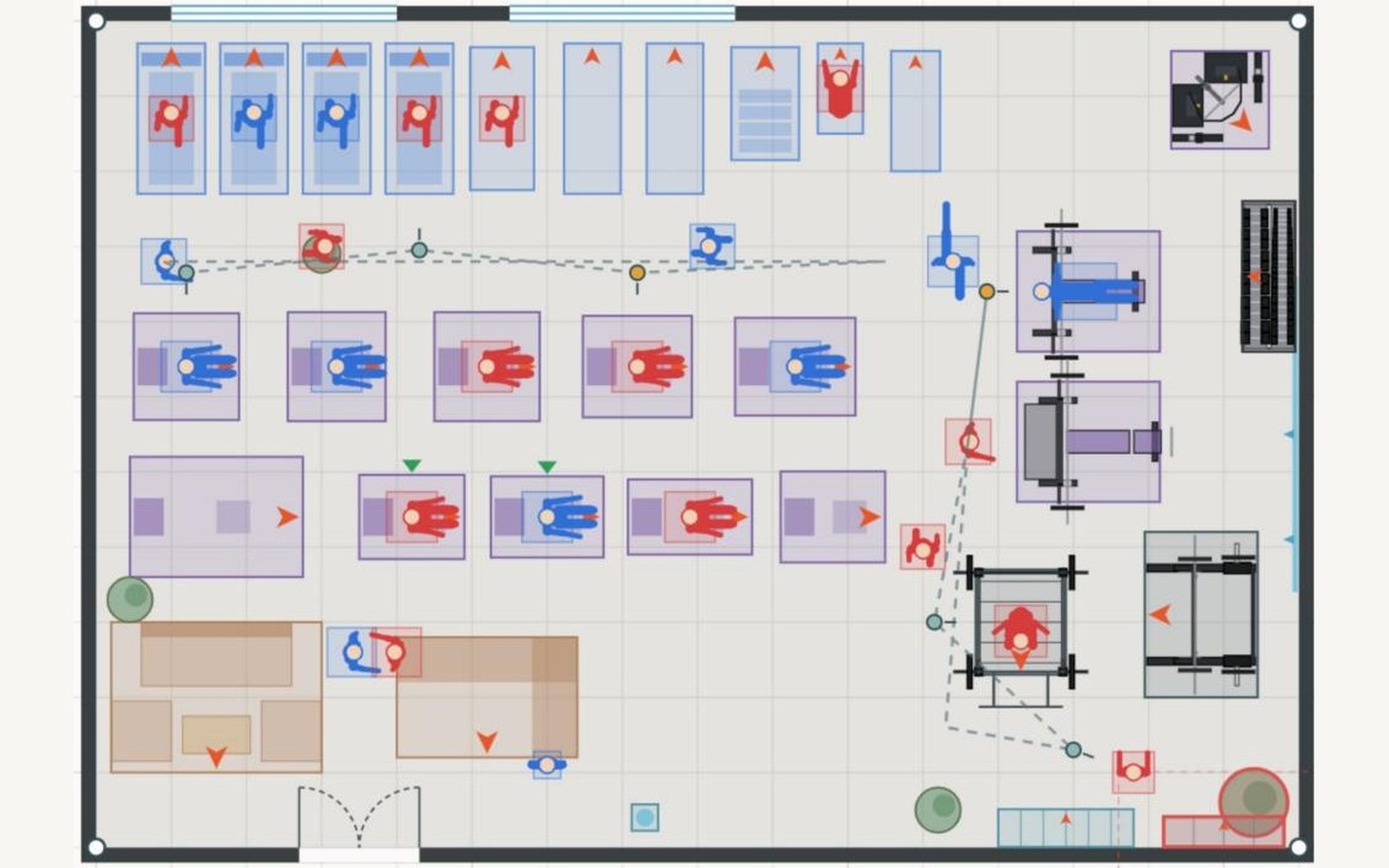
Two spaces with the same square footage can hold very different classes. Columns, a narrow shape, low beams or a door in the wrong place can cost you a whole row of bikes or two reformers. That is why it pays to draw the actual room and place the equipment before you decide.
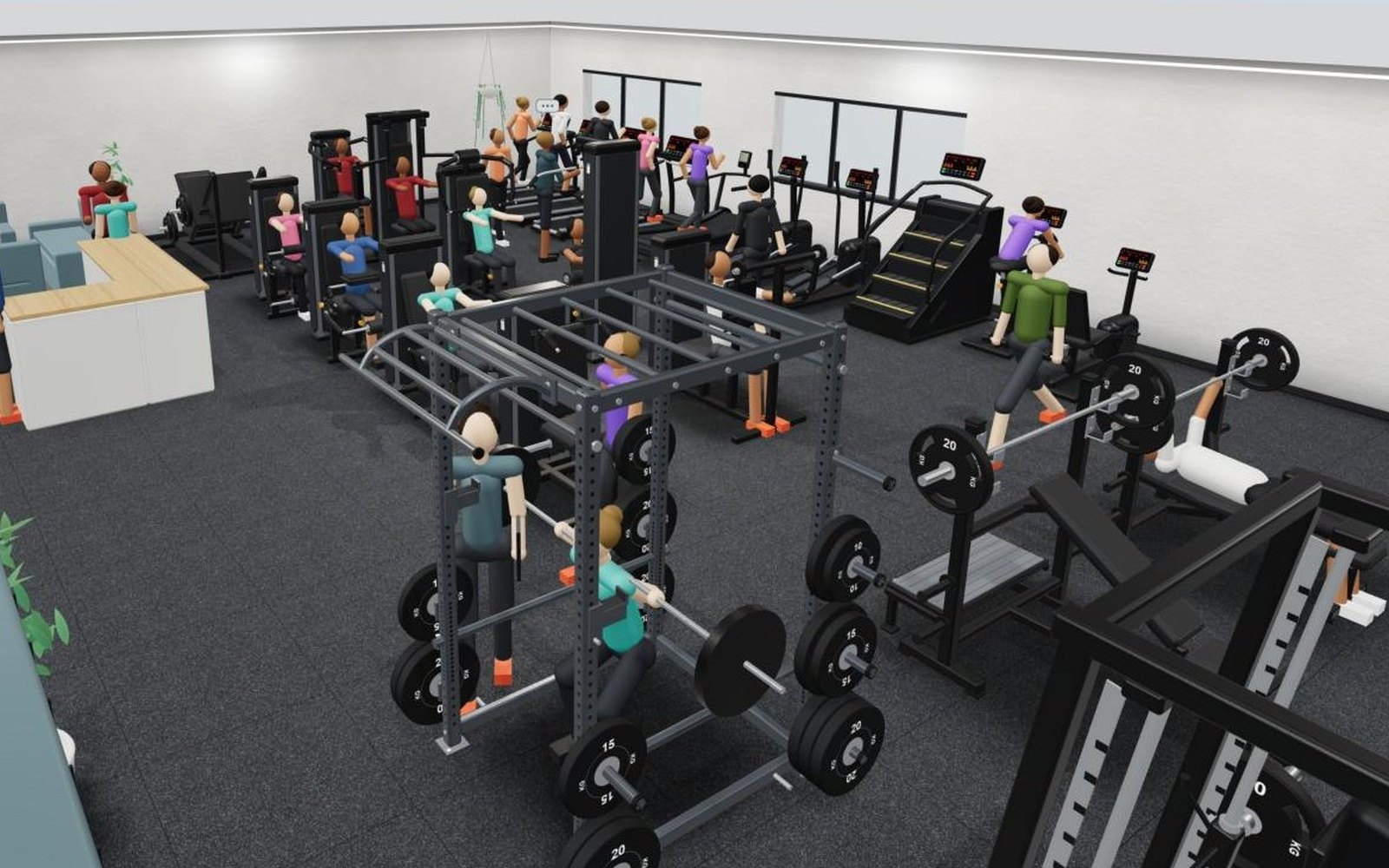
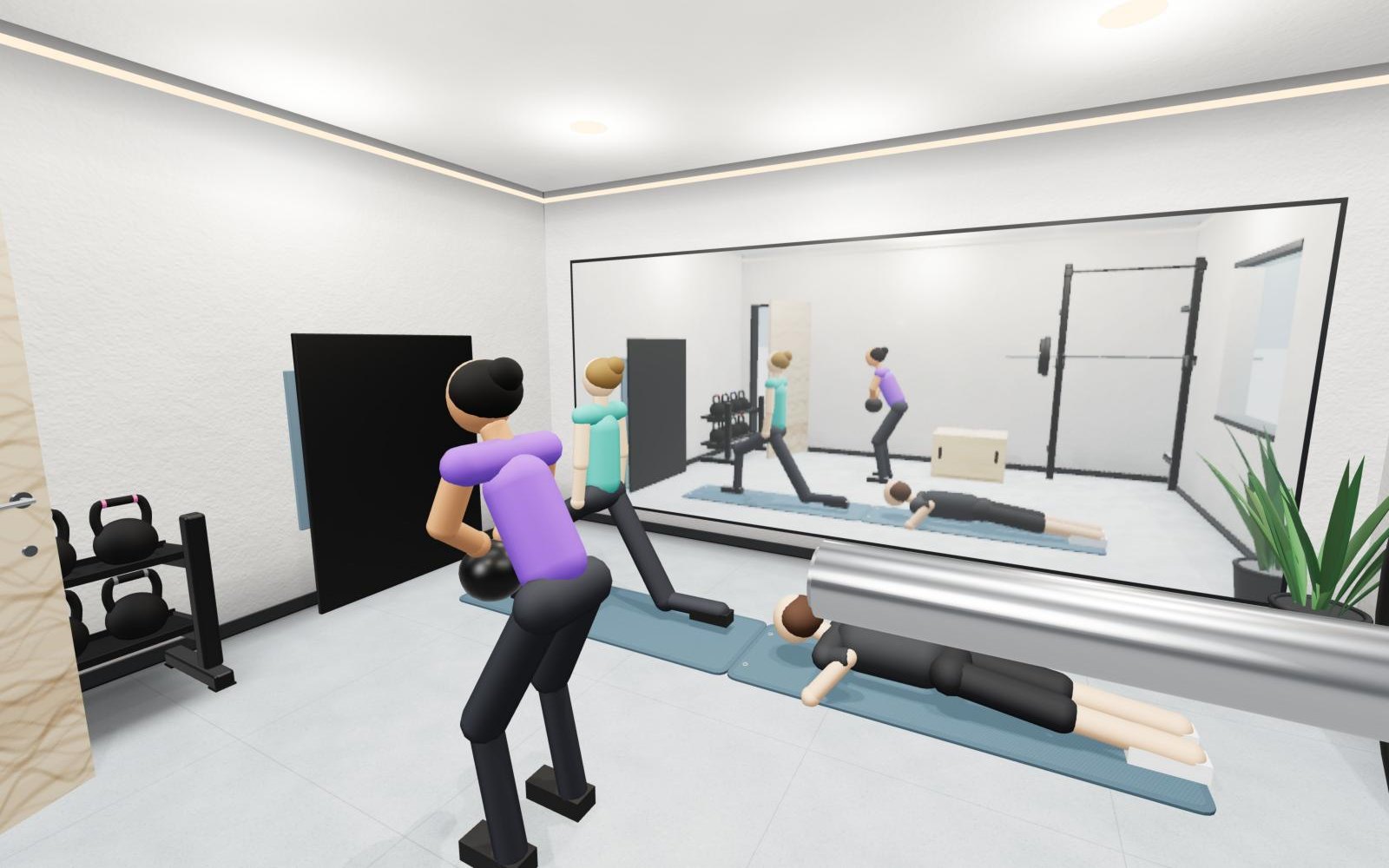
In the Fit Your Zone planner you can draw the room, start from a studio template and see how many clients really fit, free in 2D. With 3D Pro the planner also counts stations and shows the class capacity.
Ceiling height
- Yoga, mat pilates and reformer: about 2.7 m (9 ft) feels comfortable.
- Spin and boxing: 2.7 to 3 m (9 to 10 ft), more if you hang bags.
- Functional, rigs, wall balls and jumps: 3.5 m (11.5 ft) or more.
- Dance with lifts and jumps: 3 to 3.5 m (10 to 11.5 ft) or more.
Measure under the lowest beam, duct or light, not at the highest point of the ceiling.
Next steps
Read how to open a fitness studio: plan the space before you sign the lease, then the guide for your format: pilates, yoga, spin, functional, boxing or dance.
Frequently asked questions
How many square feet per person in a fitness studio?
Common planning ranges are about 22 to 27 sq ft per spin bike, 32 to 43 sq ft per yoga mat, 43 to 54 sq ft per person for HIIT and dance, and 65 to 75 sq ft per pilates reformer.
How much space do I need for a small fitness studio?
Many small studios are around 90 to 120 m² (about 970 to 1,300 sq ft): a training floor for one class plus reception, changing rooms, toilets and storage.
What ceiling height does a fitness studio need?
About 2.7 m (9 ft) for yoga and pilates, 2.7 to 3 m (9 to 10 ft) for spin and boxing, and 3.5 m (11.5 ft) or more for functional training with rigs and jumps.