Combat gyms need a lot of open, protected floor. Plan the big elements first, then fit the rest around them.
The big elements
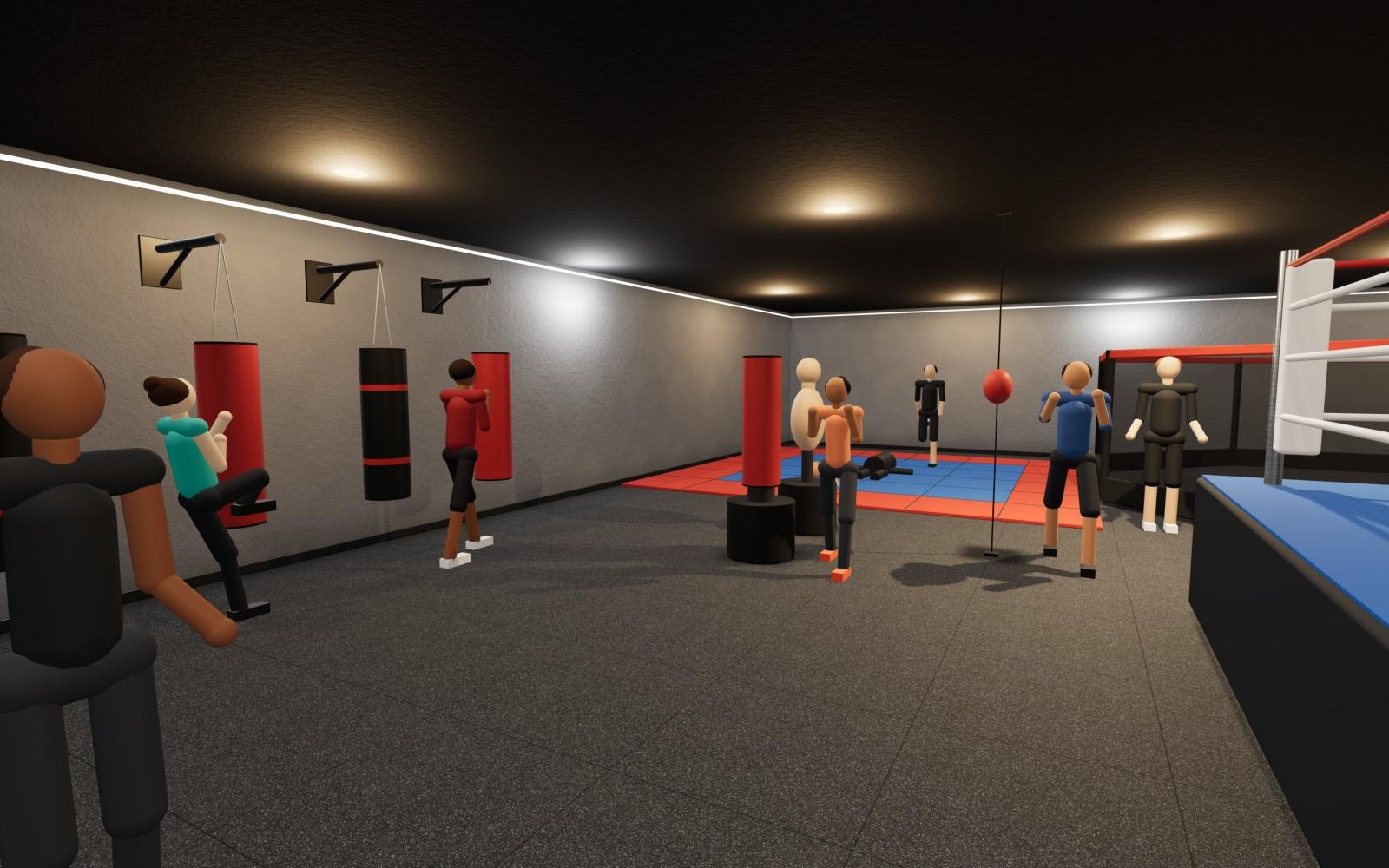
- Mat area: the main training surface for BJJ, judo, MMA and kids classes. Size it by class size: a common guideline is about 4 m² per person for grappling.
- Boxing ring: competition rings are about 5 to 6 m inside the ropes, plus space around for the apron and safety.
- Cage: octagons take a large footprint. Many gyms use a half cage or wall panels instead.
Bags and stations
Hanging heavy bags need about 1.2 to 1.5 m around them so people can move. Mount them on a reinforced ceiling structure or use a bag frame. Freestanding bags are flexible but need room too.
Walls and safety
- Pad the walls around mat areas.
- Keep 1 m or more between the mat edge and hard objects.
- Mirrors are great for technique, but keep them away from sparring zones.
Hygiene
Mats must be cleaned every day. Plan a cleaning station, a shoe area outside the mats and good ventilation.
Boxing gym size in square feet
A common planning figure is about 4 m² (43 sq ft) per person on the mats. A class of 15 needs about 60 m² (646 sq ft), plus space for heavy bags and a ring or cage if you have one.
Check before you sign a lease
- Ceiling structure that can carry heavy bags.
- Room for a ring or cage plus space around it.
- Impact and noise control.
- Ventilation for a hot, full class.
- Changing rooms and showers close to the floor.
Frequently asked questions
How much space does a boxing class need?
A common planning figure is about 4 m² (43 sq ft) per person on the mats, plus space for bags and a ring.
Can heavy bags hang from any ceiling?
No. Hanging bags need a structure that can carry the load and the movement. Check with a structural engineer.